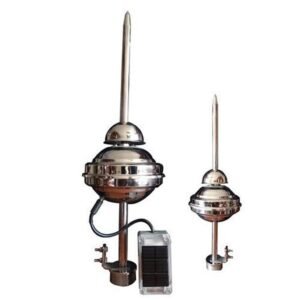
ESE (Early Streamer Emission) Lightning Arresters are not officially recognized under Indian standards like the National Building Code (NBC 2016).
However, they are not outright illegal, and their use depends on project specifications and approvals.
🇮🇳 Regulatory Framework in India
Lightning protection in India is governed by:
- National Building Code of India 2016
- IEC 62305
- IS 3043
These standards define the design, installation, and safety requirements for lightning protection systems.
🔴 Status of ESE Lightning Arresters
- The National Building Code of India 2016 does not include or recommend ESE systems
- Indian practice follows IEC 62305, which is based on the conventional Franklin rod method
- ESE systems are designed as per NFC 17-102, a foreign standard not adopted in India
👉 Conclusion:
ESE is not part of approved Indian lightning protection methodology
⚠️ Is ESE Illegal in India?
👉 No, ESE is NOT illegal.
But there’s a key distinction:
| Aspect | Status |
|---|---|
| Legal Ban | ❌ Not banned |
| NBC Recognition | ❌ Not recognized |
| Government Approval | ❌ Generally not accepted |
| Private Use | ✅ Allowed (case-dependent) |
🏢 Where ESE May or May Not Be Used
✅ Allowed / Common Use
- Private commercial buildings
- Malls, hotels, warehouses
- Fast-track construction projects
❌ Not Preferred / Rejected
- Government tenders
- PSU projects
- Infrastructure & utility projects
- High-compliance environments
📜 Important Legal Insight
The National Building Code of India 2016 is:
- A model code (guideline), not a strict law
- But widely enforced through contracts, consultants, and approvals
👉 In practice:
If a project follows NBC → ESE will likely be rejected
⚖️ Risk Factors of Using ESE in India
Using ESE without proper approval may lead to:
- ❌ Tender disqualification
- ❌ Consultant rejection
- ❌ Non-compliance with specifications
- ❌ Insurance or audit issues
⚡ Why ESE is Still Used
Despite regulatory limitations, ESE is used because:
- Larger protection radius
- Fewer installations required
- Faster installation
- Marketed as advanced technology
However:
👉 Many installations do not strictly follow NFC 17-102 guidelines, which can impact performance.
🆚 ESE vs Conventional System (Compliance View)
| Parameter | Franklin Rod (Conventional) | ESE Lightning Arrester |
|---|---|---|
| Indian Standard Compliance | ✅ Yes | ❌ No |
| NBC Acceptance | ✅ Yes | ❌ No |
| Government Projects | ✅ Preferred | ❌ Rejected |
| Private Projects | ✅ Yes | ⚠️ Conditional |
🏁 Final Verdict
✔ ESE Lightning Arresters are not illegal in India
❗ But they are not recognized under NBC 2016 and Indian standards
👉 For government, PSU, and compliance-driven projects:
Use conventional Franklin rod systems (IEC 62305 compliant)
👉 For private projects:
ESE may be used only after consultant approval and risk evaluation
❓ FAQs
1. Is ESE lightning arrester banned in India?
No, it is not banned—but it is not recognized under Indian standards.
2. Can ESE be used in government projects?
Generally no, as most government tenders follow NBC and IEC standards.
3. Which standard supports ESE?
ESE follows NFC 17-102, not Indian standards.
4. What is the safest option in India?
Conventional lightning protection systems designed as per IEC 62305.