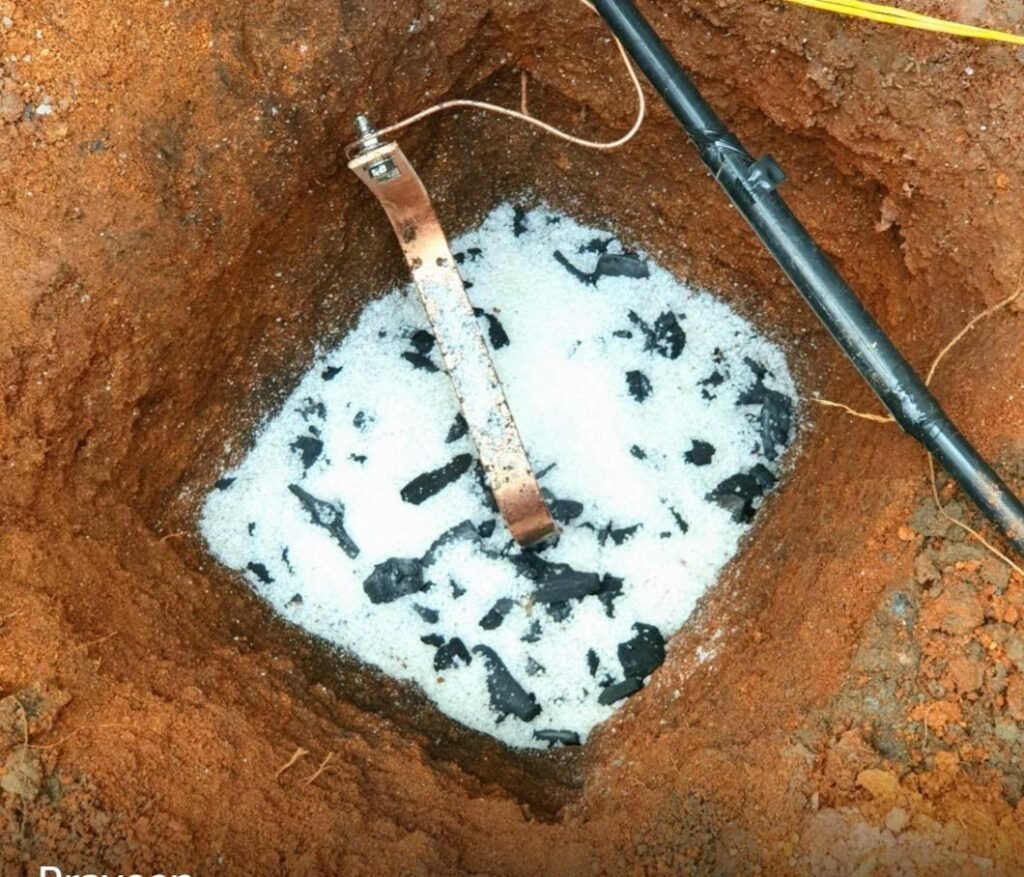
Types of Earthing
The grounding of electrical devices, housing, and wiring takes place in an earthed environment. Electric earthing systems can be classified into the following types:
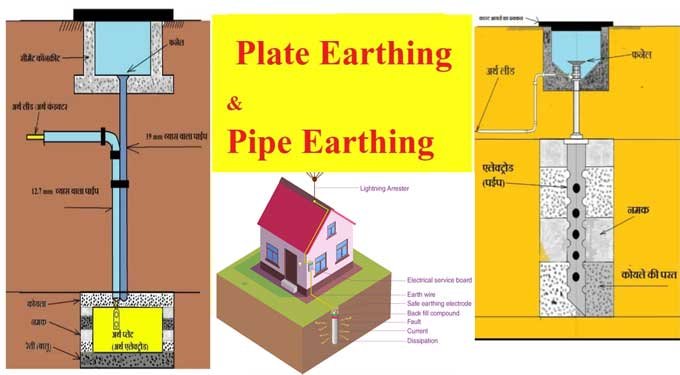
1. Plate Earthing
Earthing is accomplished by placing a copper or galvanized iron plate vertically in a ground pit less than three meters underground. The moisture condition of the earth around the plate earthing system is essential to a more effective electrical grounding system.
To redirect the electrical charge within the earth, this plate is attached to electrical wires that are attached to the ground.
2. Pipe Earthing
An earthing pipe is a method by which a steel pipe is used to connect to the earth’s electrical conductors for the purpose of connecting with electricity.
When pipe earthing is conducted, a vertically laid 38 mm diameter galvanized steel pipe with a 2-meter length is used as an earth electrode. Iron pipe size is determined by soil moisture and current strength. Depending on the amount of moisture in the soil, it will be possible to install the steel pipe up to a certain depth.
A pipe earthing system is one of the best and most effective methods for earthing, and it is also one of the most economical methods.
3. Rod Earthing
This method of earthing is carried out by inserting a copper rod together with a galvanized steel pipe vertically into the ground, to the desired value, using a hammer or manually pounding the rod into the ground; the lengths of the electrodes implanted reduce the resistance of the earth.
By burying the short-circuit rod at a certain depth, the electricity is securely redirected to the ground.
Earthing techniques such as this one are suitable for sandy soils, and they are also very affordable.
4. Wire and Strip Earthing
The earthing method uses strip electrodes buried in horizontal trenches with a minimum cross-sectional area of 6.0 mm2 and a minimum depth of 0.5 m. These electrodes must have a minimum cross-sectional area of 25 mm x 1.6 mm if they are made of steel or galvanized iron.
In order to provide sufficient earth resistance, a conductor should be buried in the ground for a minimum of 15 meters.
5. Earthing across the Waterman
Earthing is performed using waterman (Galvanized GI) pipes. GI pipes should be checked for resistance and earthing clamps should be used to minimize it for proper earthing.
If a stranded conductor is used as the earth wire, make sure the end of each strand is clean and straight, and parallel so that it may be snugly connected to the waterman pipe.